LIISMA continued its work to reduce the threat of invasive species in September, working in our fresh waters with waders and tidal zones with conservation dogs.

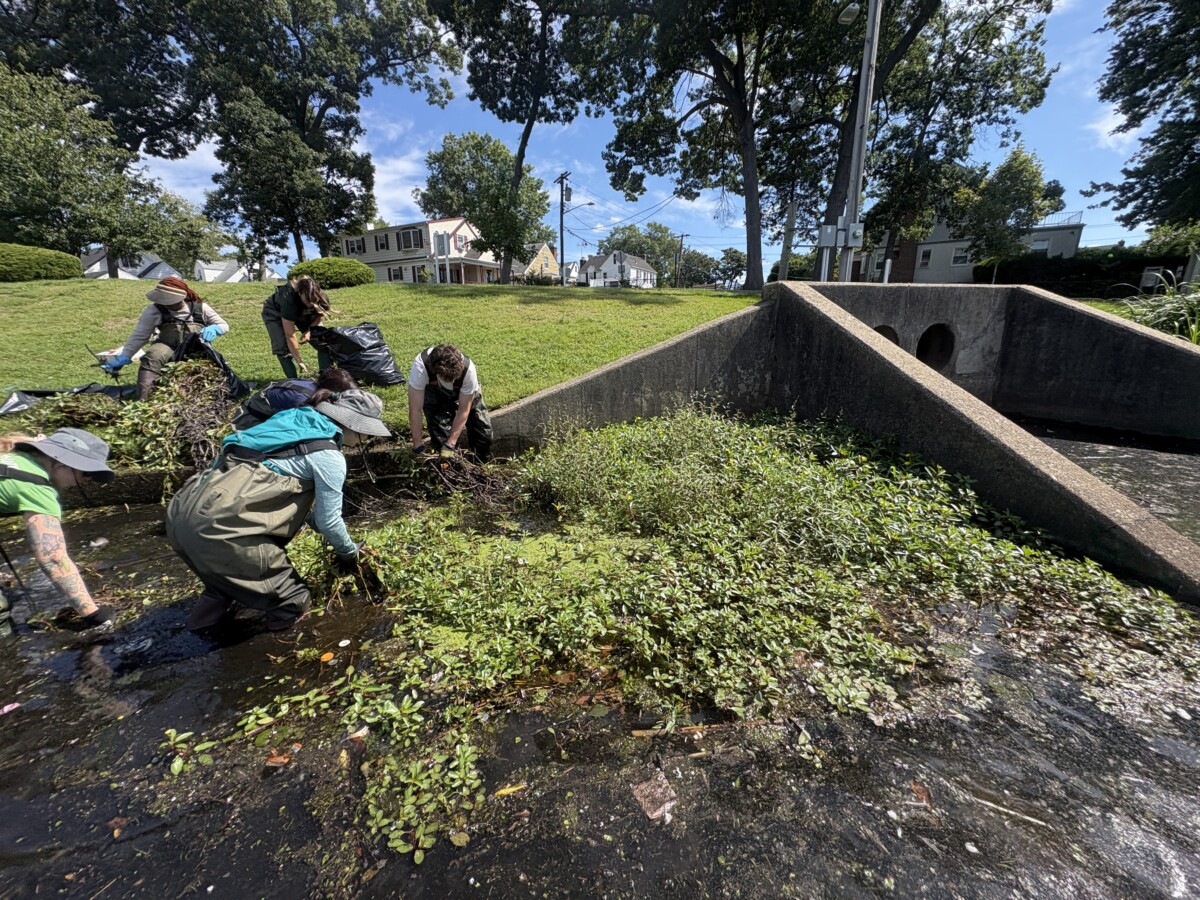
At Artist Lake in Brookhaven and Arthur J. Hendrickson Park in Valley Stream, LIISMA worked with the same aquatic invasive plant: floating water primrose (Ludwigia peploides). If left unchecked, this plant grows rapidly and densely around shorelines, impeding recreation and stifling native plants. This month, Kassidy and Cassandra completed their second visit for the year at Artist Lake, finding and removing 125 individual plants along the shoreline. While this is more plants than their first visit in July, we are pleased to see a downward trend – the invasive plant at Artist Lake is slowly declining over the years with repeated management.
Our team saw similar results at A.J. Hendrickson Park. Working with the Nassau County Soil and Water Conservation District and Village of Valley Stream, the team collected half as many garbage bags of floating water primrose compared to last year, with noticed improvement in stream flow. Thanks to our partners, we are happy to see progress at these sites.



A second visit to Sears Bellows County Park was likewise met with success. With staff from Southampton Community Preservation Fund and public volunteers, the team managed phragmites (Phragmites australis) at the shoreline of Bellows Pond and at Grass Pond. The team found record-low numbers of phragmites stems at Bellows, spading only 52 stems, and only 85 stems at Grass Pond. We were happy to see the Bellows Pond shoreline blossoming with native species and Grass Pond living up to its name with lush abundant sedge throughout while water levels were low.

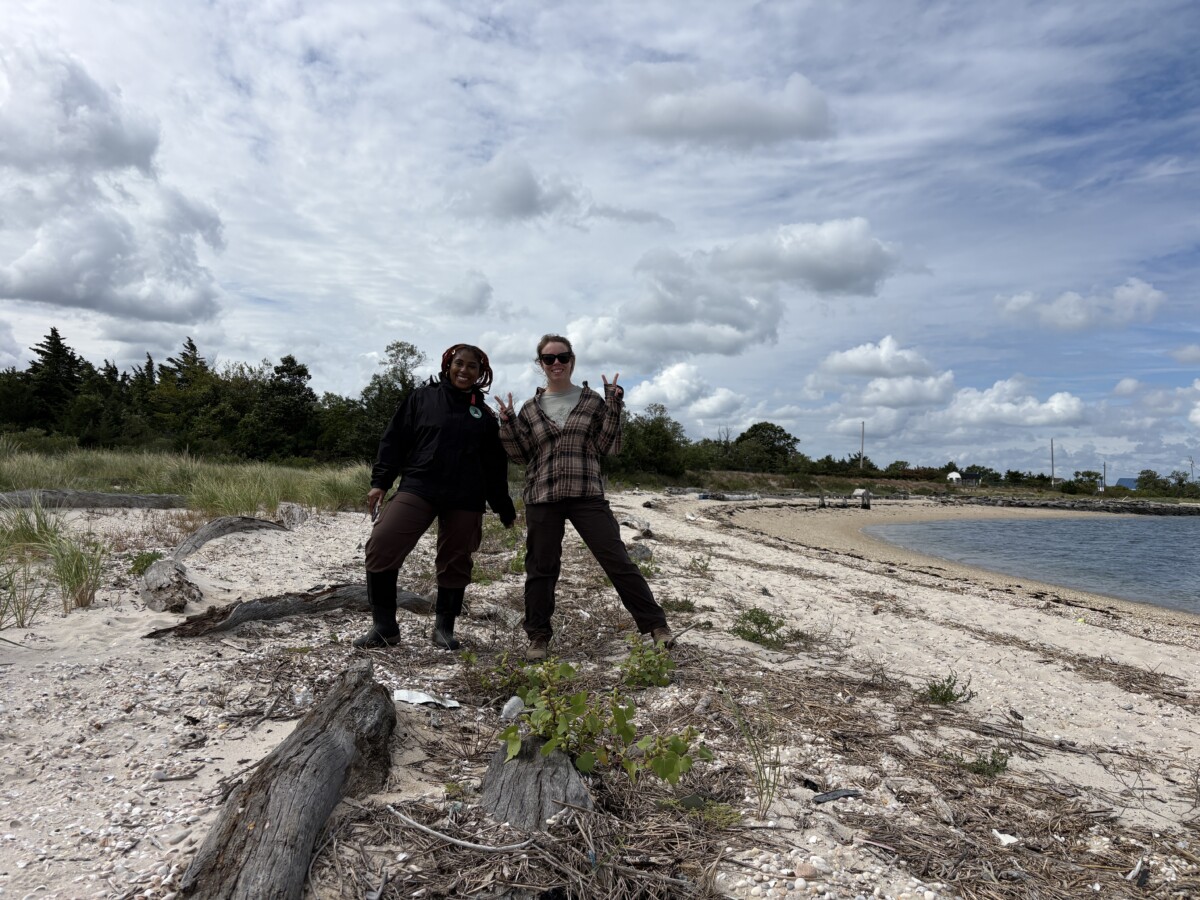
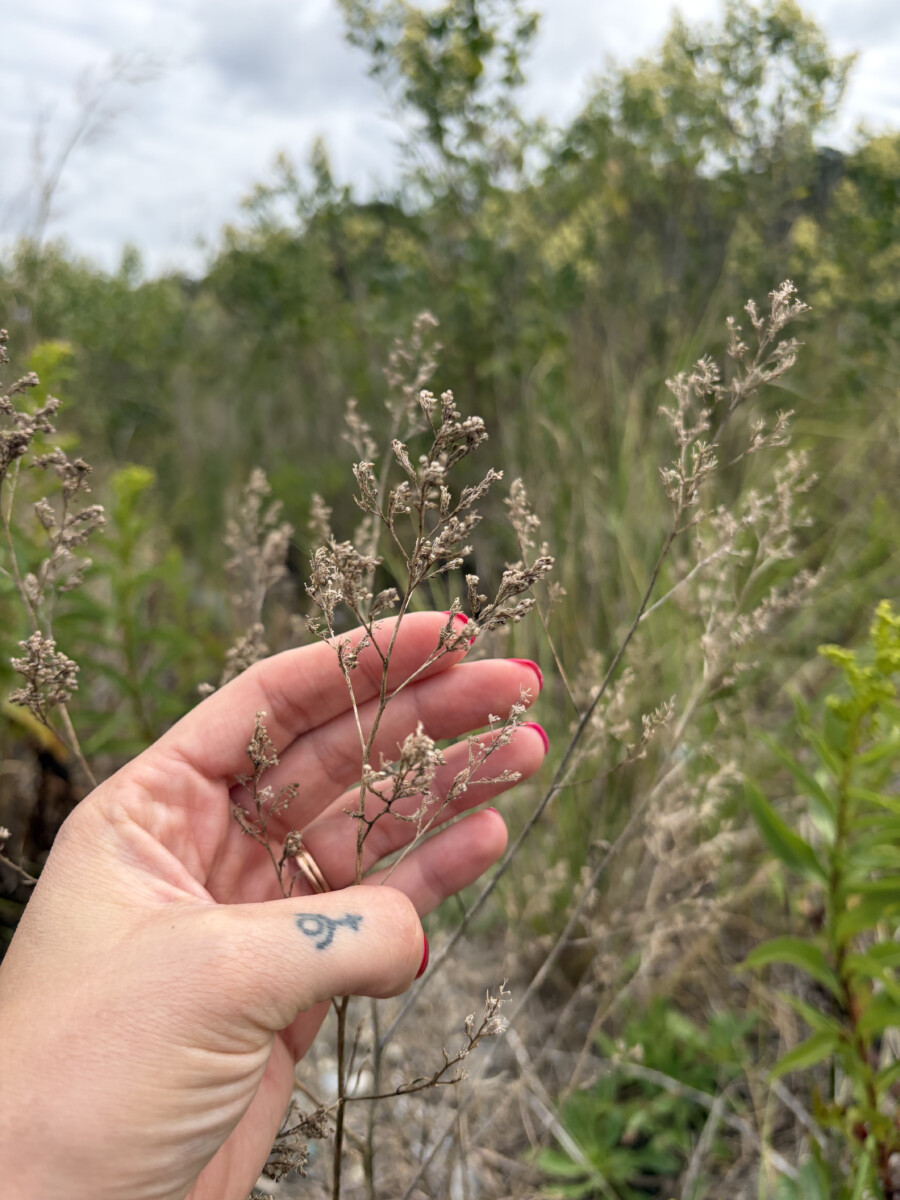
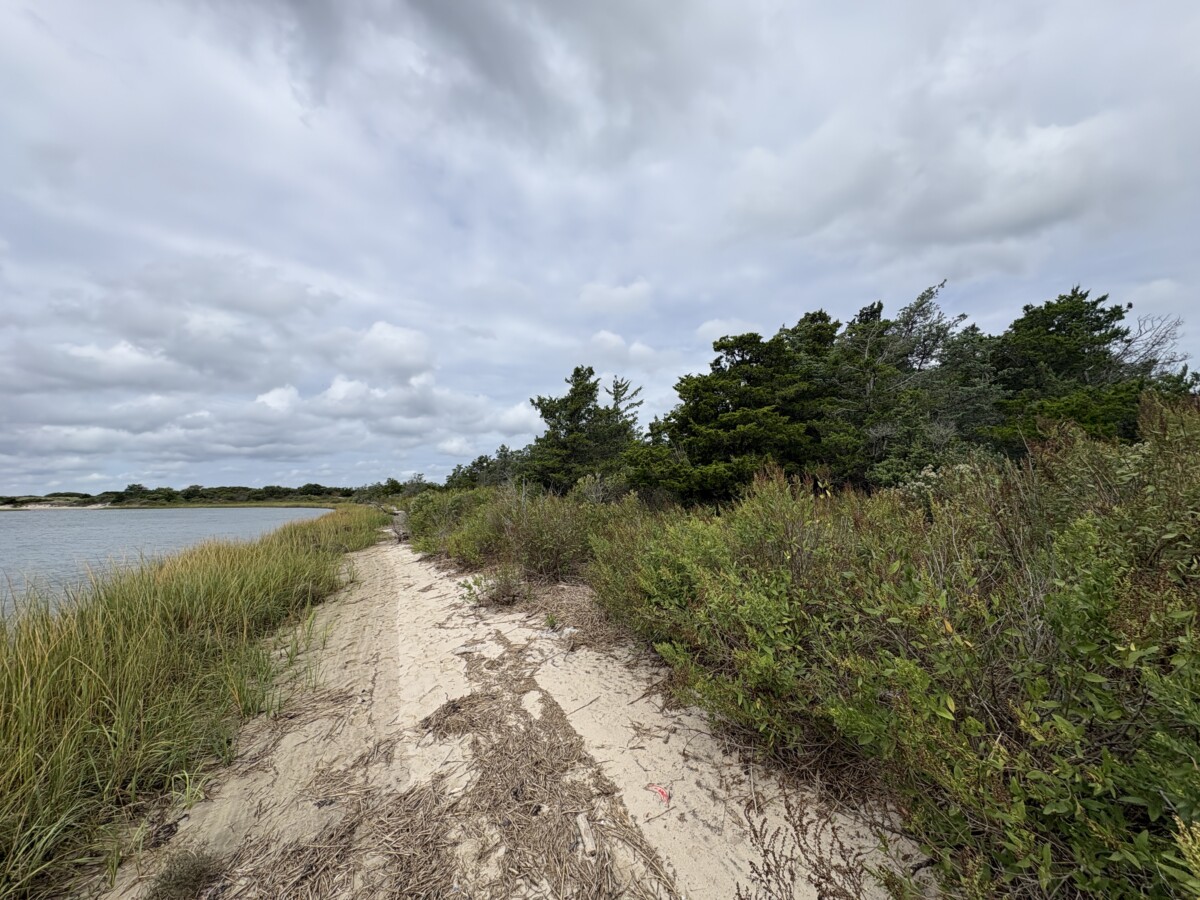
Perhaps the most exciting field work this month came with waggling tails! This month, the Dogs for Invasive Species Control (DISC) program visited Long Island to assist LIISMA with surveying for perennial pepperweed (Lepidium latifolium) at nine locations. Professional handlers Arden, Brenna, and Addy worked with trained conservation dogs Lettie and Stevie to sniff out this emerging invasive species around the Long Island Sound. These dogs can detect invasive species much more accurately than humans can, giving us a clear picture of where this species is present and absent. We’re fortunate to say that the dogs did not detect perennial pepperweed in any of the areas where it was not previously reported.
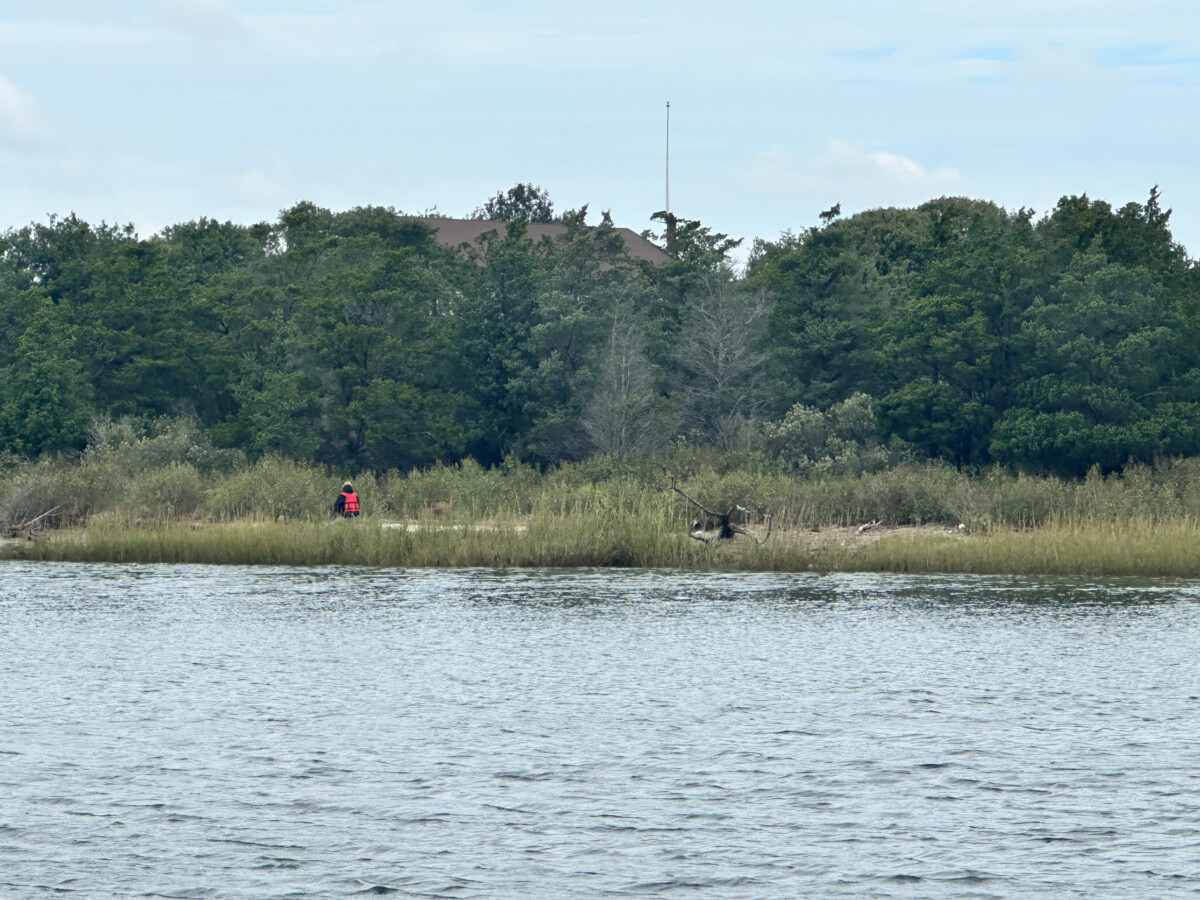
After the dogs finished their work, one perennial pepperweed site remained – due to tides and access issues, our team turned to alternative survey methods at the Mattituck Inlet. Carlos Morantes Ariza, the NYSDEC Region 1 Aquatic Invasive Species Coordinator, used a drone to help Melody detect perennial pepperweed in harder-to-access marsh areas. With additional staff on a kayak, the team was able to map out this new population of perennial pepperweed adjacent to the marsh and boat launch site, getting us one step closer to management.
As our island weather finally starts to cool, we thank our partners for another great month of fieldwork. Stay tuned for a final fieldwork in focus article this October!